Are you setting up a new physiotherapy website, or looking to get more enquiries from the website you already have?
SEO can help people find your clinic when they search for the treatments you offer and the areas you serve. But having a website doesn’t automatically mean you’ll appear for those searches.
Here at Swift & Co, we specialise in SEO and have worked with service-based businesses to improve their websites. In this guide, I’ll explain what I recommend focusing on when it comes to SEO for physiotherapists, with examples you can apply to your own clinic.
What Is SEO for Physiotherapists?
SEO stands for search engine optimisation. It involves improving your website so search engines can understand it and people can find it through relevant searches.
For a physiotherapy clinic, that could mean appearing when someone searches for “physiotherapist Leeds” or “sports physiotherapy” and visits your website to find out more or book an appointment.
Unlike Google Ads, which we also offer, organic search listings don’t involve paying Google for each click. They aren’t necessarily the first thing on the page: adverts and other search features can appear above them.
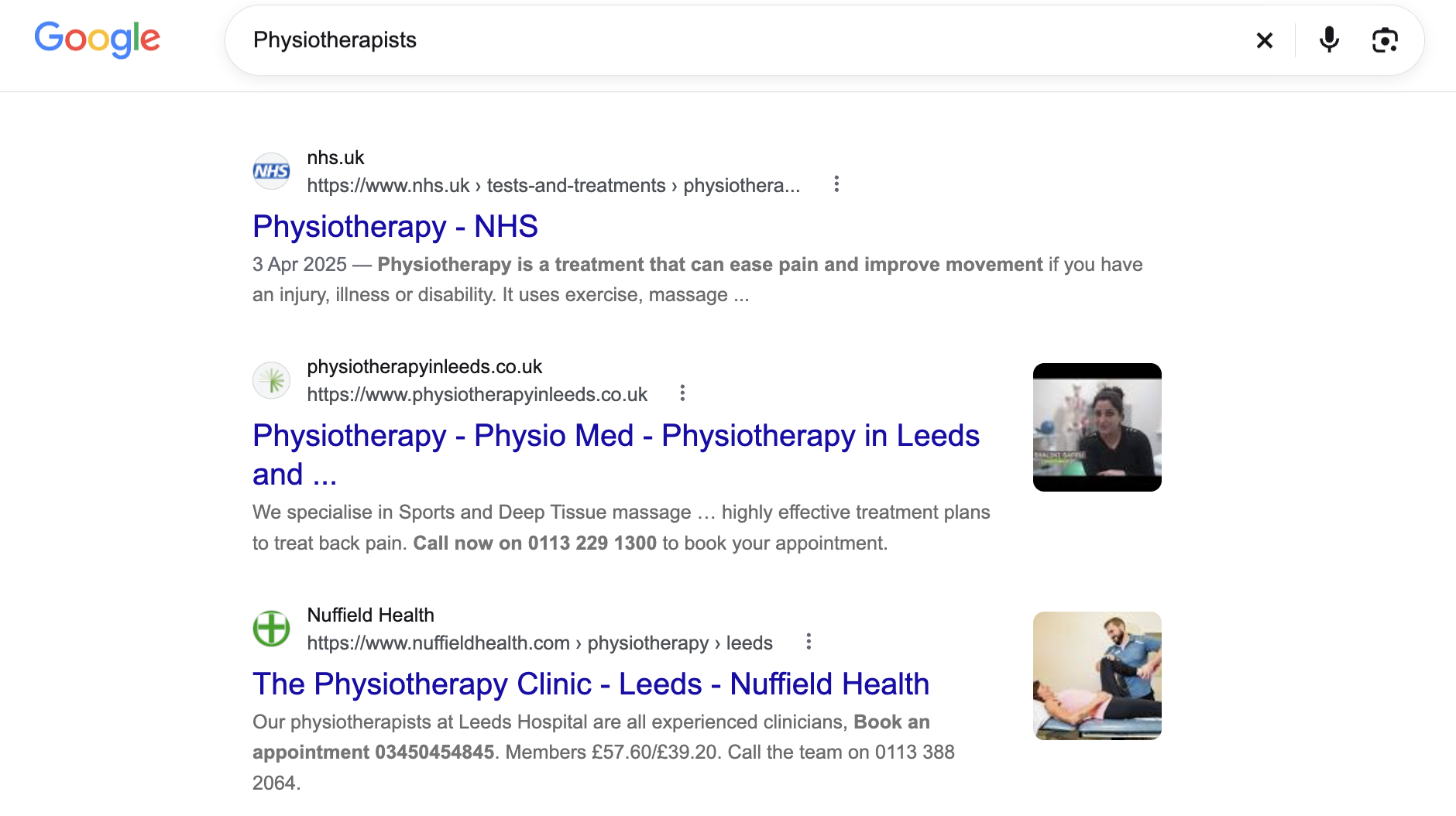
A good-looking website is a useful start. You also need pages that answer what potential patients are looking for, clear information about your practice and a website Google can access.
Start With the Main Keywords for Your Clinic
Before creating pages, think about how people might search for your services.
For example, a clinic in Leeds could investigate:
- Physiotherapist Leeds
- Physiotherapy Leeds
- Sports physiotherapy Leeds
- Private physiotherapy Leeds
- Physiotherapy for back pain Leeds
These are illustrative keyword ideas, rather than a list with verified search volumes. Only target treatments you actually offer.
A broad term such as “physiotherapist UK” might look appealing, but someone searching from the other end of the country may never visit your clinic. A more specific local search could bring you a much more relevant enquiry.
Check demand, relevance and the pages already appearing before deciding what to target. Don’t choose a keyword purely because it has the highest search volume.
If you need help with that step, I’ve explained how to choose keywords for SEO in a separate guide.
Create Pages for Your Main Services
Once you know which services people are searching for, make sure your website explains them properly.
Trying to cover everything in a short section on your homepage can leave potential patients without the detail they need.
For example, if sports physiotherapy is a significant part of your practice, a dedicated page could explain who it’s suitable for, the types of problems your clinicians assess, what an appointment involves and how to book.
You might also have separate pages for other distinct services you provide, such as post-operative rehabilitation or physiotherapy home visits.
You don’t need a separate page for every keyword variation. “Sports physio Leeds” and “sports physiotherapy Leeds” could fit naturally on the same page. Create a separate page when there’s a distinct service or patient need worth explaining.
Give each page a clear title and main heading. For example, “Sports Physiotherapy in Leeds” is more helpful than a vague heading such as “Our Solutions”. Then write the page for the person considering treatment, without repeating the keyword in every paragraph.
Include a clear next step too. Someone who has found the right service should be able to see how to enquire or book.
Use Location Pages Where They’re Useful
Physiotherapy is usually a local service. People often want somewhere they can realistically travel to, particularly if they’ll need several appointments.
That’s why I recommend looking at searches combining your service with your location, such as “physiotherapist Leeds”. Smaller areas can be worth investigating too, depending on where your clinic is and whether there’s relevant demand.
For example, a clinic based in Headingley could have a useful page explaining its physiotherapy services in Headingley, its address, transport links, parking, accessibility and the clinicians patients can see there.
If you have several genuine clinic locations, each location can have its own page with details specific to that practice.
Avoid copying the same page and swapping the place name for every nearby town. Each page should accurately explain how you serve that area and provide useful information. Google’s spam policies identify substantially similar location pages that funnel people elsewhere as a potential doorway-abuse issue.
You don’t need a page titled “Physiotherapist Near Me”. Accurate location information across your website and Google Business Profile helps establish where you are. Local visibility also depends on factors outside your website, including the searcher’s distance from your clinic.
Show Why Patients Can Trust Your Practice
Someone considering physiotherapy wants to know who will be treating them and whether your practice is suitable for their needs.
Make that information easy to find. I recommend including:
- Clinician profiles with accurate qualifications, registration details and areas of experience.
- Genuine patient reviews and testimonials you have permission to publish.
- Clear contact details, your clinic address and information about appointments.
- Case studies, where appropriate and consented, explaining the patient’s situation and your approach without promising the same outcome for everyone.
- Clear links to your main services and clinic information through the navigation, footer and relevant page content.
For example, a sports physiotherapy page could link to the clinician who provides that service, giving someone a straightforward way to check their background before booking.
This also applies to articles covering health topics. Make it clear who wrote or clinically reviewed the advice and use appropriate sources. Google’s guidance on helpful content places particular importance on trust for information that could affect someone’s health.
Adding a testimonial or clinician biography doesn’t guarantee a higher ranking. These details help people assess your practice and make your website more useful and credible.
Build Relevant Listings and Backlinks
A backlink is a link from another website to yours.
For a physiotherapy clinic, relevant business listings and genuine coverage can help people discover your practice. Links from other websites can also help Google discover and assess your pages, although their value varies.
Start with reputable directories that make sense for your business. That could include a relevant professional directory, a local business directory or a recognised platform such as Yelp, where an appropriate listing is available. Keep your business name, address and phone number accurate.
Treat these as useful places for people to find your clinic. A free listing isn’t automatically a valuable SEO backlink, and submitting your details to hundreds of low-quality directories isn’t a good strategy.
Your clinical expertise can also create opportunities for relevant coverage. For example, a local running club might publish an article with your input on preparing for a race and link to your sports physiotherapy service as a useful resource.
That’s an illustrative opportunity, rather than a requirement to get a link from every club. Focus on relevant contributions and genuine relationships, and avoid buying links to manipulate rankings.
Set Up and Maintain Your Google Business Profile
Google Business Profile is particularly important for a local clinic because it lets people find business details through Google Search and Maps.
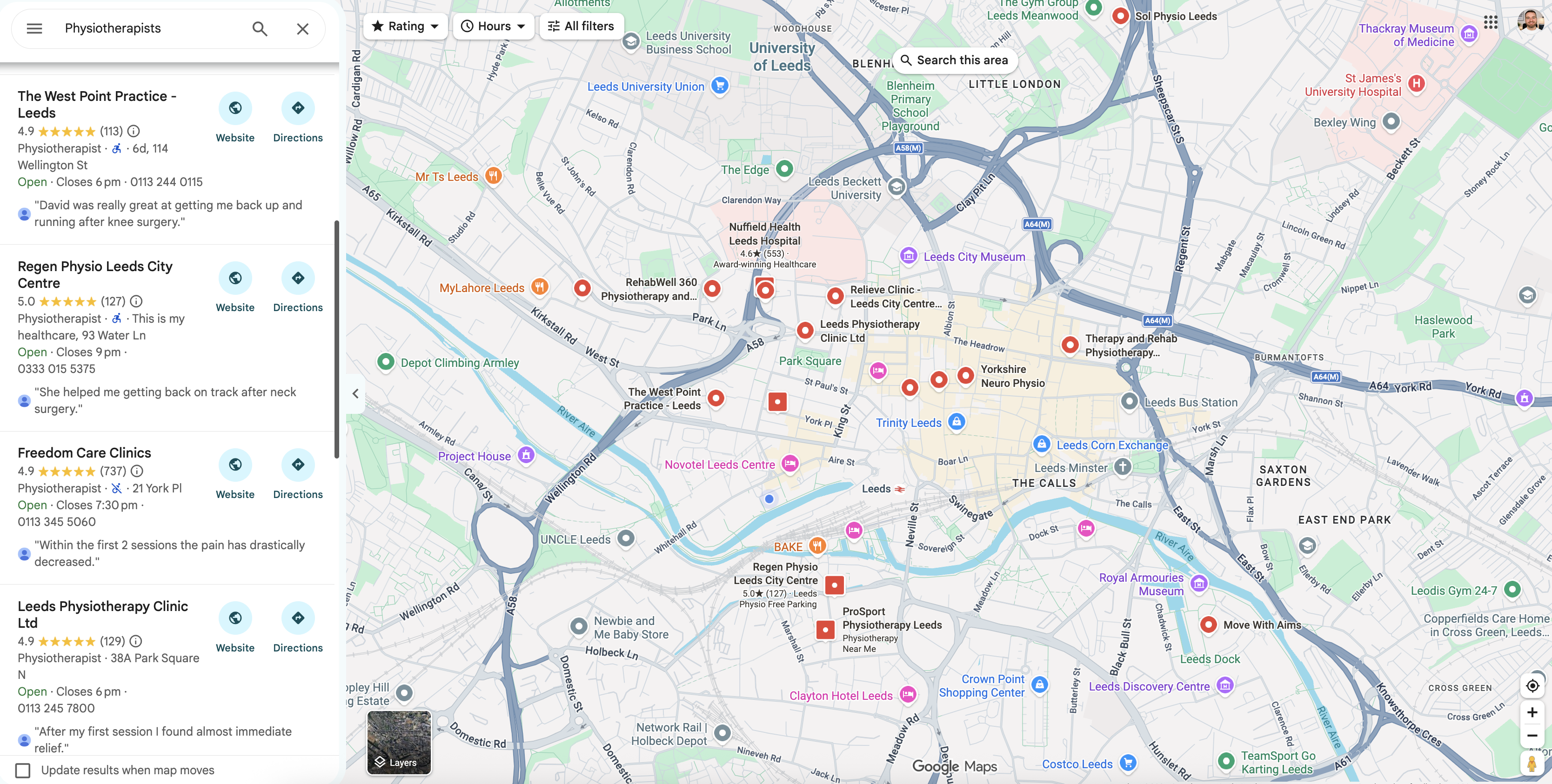
Adding or claiming an eligible Business Profile is free. Check whether your clinic already has a listing, claim or create the appropriate profile, then complete the verification process Google offers.
I recommend checking that your profile includes:
- Your real business name, correct address, phone number and website.
- Accurate opening hours and changes for holidays.
- The most appropriate primary business category, with a few relevant additional categories where they genuinely apply.
- Your services, useful clinic photos and an appointment link where available.
- Genuine patient reviews and thoughtful replies that respect patient privacy.
Categories describe your business; they aren’t a keyword list. Google recommends choosing a few appropriate categories, rather than a category for every service. Keep the individual treatments in your services information.
Google explains that local rankings mainly depend on relevance, distance and prominence. A complete profile helps explain what you offer, but it doesn’t guarantee you’ll appear first across every part of Leeds.
Write Blog Posts That Answer Patients’ Questions
Once your main service and location pages are in place, blog content can help you answer questions people have before they book.
For a physiotherapy clinic, useful topics to investigate could include:
- What happens at your first physiotherapy appointment?
- What should you wear to a physiotherapy appointment?
- What does sports physiotherapy involve?
- How does a physiotherapist assess a running injury?
These are example topics to research, without verified search volumes. Choose questions your clinicians can answer accurately and that relate to the services you provide.
For example, an article explaining a running-injury assessment could describe what a patient can expect, then link naturally to your sports physiotherapy page.
Articles about symptoms, treatment or exercises need appropriate clinical input. Avoid presenting a general article as a diagnosis or promising that one exercise will fix everyone’s problem.
The aim is to help someone understand their options and see whether your practice could be suitable. That gives the article a useful purpose beyond bringing another visitor to your website.
Where Should You Start?
Start with the services you offer and the locations you genuinely serve. Build useful pages around those needs, show who’s behind your practice, keep your Google Business Profile accurate and add helpful articles as you go.
If you’d like help putting that into practice, get in touch with Swift & Co to talk about SEO for your physiotherapy clinic.